SONY CAMERA BUYING GUIDE
Which Sony Camera Is Right for You?
Answer 15 questions about your budget, subjects, carry preferences, video plans, and future goals.
Choosing your first interchangeable-lens camera can be confusing because Sony offers everything from compact used APS-C bodies to high-resolution full-frame and professional flagship cameras. This quiz is designed to help beginners, students, serious hobbyists, and new professionals find the best beginner Sony camera for the way they actually plan to shoot. The goal is to help you find the best Sony system for your needs without overspending -- something you will enjoy using and, most importantly, take great photos with.
Last reviewed July 14, 2026. Model availability and pricing change frequently.
SONY CAMERA QUIZ
15 questions. A clear starting path.
Answer questions about your budget, subjects, carry preferences, video plans, and future goals. The scoring engine weighs your answers against each Sony camera family and selects the best match.
No email required. Recommendations are based on transparent scoring and firsthand Sony experience.
All Sony camera recommendations
Every recommendation is shown below. Complete the quiz above to highlight your best match and scroll directly to it.
Used Sony A6000: the low-pressure, low-cost way to begin
Sony A6000 (used)
The A6000 remains a practical entry into Sony photography when the budget is tight and used equipment is acceptable. It gives a beginner real control over exposure, interchangeable lenses, an electronic viewfinder, and image quality that can still produce excellent photographs. Its biggest advantage is not a specification: it is small enough to bring along. A camera that lives in a closet because it feels too large is not a bargain.
My perspective
This is where I started. With a small prime lens, the A6000 felt natural for street and travel photography rather than like I was walking around with a large professional rig. I took it to Spain, Italy, the beach, and family outings. A portrait lens made it useful for family photographs, and the inexpensive Sony 55-210mm gave me my first real telephoto capability. That small kit allowed me to learn what I actually enjoyed photographing before spending heavily.
Best for
- --Travel and street photography
- --Family photos
- --Students and first-system buyers
- --Daylight landscapes and everyday practice
- --People who value compact size more than the newest autofocus
Why your answers point here
- --Your budget is the strongest constraint.
- --You value small size and low carry weight.
- --You are learning for enjoyment rather than building an immediate professional kit.
- --Your subjects do not require the newest tracking or extreme cropping headroom.
What to know before buying
- --It is an older body -- autofocus, menus, battery life, video tools, and general responsiveness do not match newer Sony cameras.
- --Heavy wildlife cropping is where the limitation becomes clear.
- --It does not include in-body image stabilization.
- --Buy from a reputable used seller and inspect the sensor, controls, battery, card slot, screen, and lens mount.
First lens plan
Keep the first kit simple. Use the compact 16-50mm kit zoom for travel and learning, or add a small normal/portrait prime when low-light family photographs and background blur matter. The 55-210mm is a cost-effective way to experiment with wildlife and outdoor subjects before committing to a larger telephoto.
Who should consider something else
Skip this recommendation when fast bird tracking, demanding video, paid event reliability, weather exposure, or aggressive cropping is central to your plan. A used A6100/A6400, A6700, or full-frame path will give you more room.
Long-term upgrade path
Move to a used A6100/A6400 for newer autofocus, an A6700 for the strongest compact APS-C growth path, or full frame only after you know why you need it.
Used Sony A6100 or A6400: the smarter APS-C value upgrade
Sony A6100 / A6400 (used)
Choose this path when the A6000 philosophy appeals to you but you want a more modern autofocus experience. A used A6100 or A6400 can preserve the compact APS-C advantage while reducing one of the main frustrations beginners encounter: missed focus on moving people, pets, and animals. It is often the sweet spot between buying the absolute cheapest body and paying for a current flagship APS-C model.
My perspective
My A6000 taught me how valuable the compact Sony format can be. If I were beginning again with a little more budget, I would place more value on improved subject tracking earlier. Better autofocus does not replace technique, but it can make the learning process less discouraging when children, pets, or birds refuse to stay still.
Best for
- --Families with active children and pets
- --Travel and street photography
- --Beginning wildlife and bird photography
- --Students who can borrow APS-C lenses
- --Budget-conscious content creators who still need strong still photographs
Why your answers point here
- --You want a compact system but rated autofocus above basic.
- --You are comfortable buying used.
- --You expect family, travel, wildlife, or occasional video rather than only static subjects.
- --You want to learn without committing to full-frame lens prices.
What to know before buying
- --The A6100 is the simpler value body; the A6400 generally offers a more enthusiast-oriented build and controls.
- --Neither provides the same stabilization and hybrid-video experience as the A6700.
- --APS-C lens purchases should be intentional if you expect to move to full frame later.
- --Long telephoto lenses can remove much of the size advantage of the small body.
First lens plan
Start with a compact zoom for travel or a small prime for portraits and low light. For beginner wildlife, an affordable APS-C telephoto zoom is enough to learn tracking, shutter speed, and field technique before buying a large full-frame lens.
Who should consider something else
Skip this branch when you already know you need heavy cropping, large commercial prints, full-frame low-light performance, dual-card professional redundancy, or advanced video tools.
Long-term upgrade path
The A6700 is the natural APS-C upgrade. A used A7 III or A7R III makes sense only when full-frame lenses and a specific full-frame benefit justify the total cost.
Sony A6700: the compact Sony system with serious room to grow
Sony A6700
The A6700 is the strongest recommendation for someone who wants a genuinely capable modern camera while keeping the advantages of APS-C. It is small enough for travel and hiking, offers sophisticated subject recognition, and provides useful apparent reach with telephoto lenses. For many hobbyists, it is not a temporary beginner camera -- it can be the complete system.
My perspective
My early Sony experience showed me how much easier it is to carry a compact body in public and on trips. The A6700 preserves that strength while addressing many of the autofocus and video limitations that separate an older A6000 from a modern hybrid camera. For a hiker or birder, that balance can matter more than owning the largest possible sensor.
Best for
- --Birding and wildlife on a weight-conscious kit
- --Hiking and travel
- --Children, pets, and action
- --Hybrid still photography and video
- --Students and hobbyists who want a current long-term APS-C body
Why your answers point here
- --You want wildlife or action autofocus but also care about size.
- --You expect to hike or travel with the camera.
- --Video matters, but still photography remains important.
- --You want a current body with room to learn rather than the lowest possible purchase price.
What to know before buying
- --APS-C can be an advantage for reach and portability, but it does not create extra optical magnification -- it narrows the field of view.
- --Low-light performance and extreme cropping still depend on the lens, exposure, and available pixels.
- --Building a large APS-C lens collection can complicate a later full-frame move.
- --A serious telephoto lens remains the largest and most expensive part of many wildlife systems.
First lens plan
For a one-lens travel or hiking setup, pair it with a versatile APS-C zoom. For wildlife, prioritize a telephoto that you can realistically carry. A smaller lens that reaches the trail is more useful than an enormous option left at home.
Who should consider something else
Choose full frame instead when you have reliable access to full-frame lenses, plan paid low-light events, need maximum cropping or print resolution, or already know that a professional full-frame lens system is your destination.
Long-term upgrade path
A high-resolution full-frame body is the future path for maximum cropping and detail. Do not upgrade until the limitation is clear.
Used Sony A7 III: the practical first full-frame system
Sony A7 III (used)
A used A7 III can be the most rational entry into Sony full frame. It is old enough to be more affordable, but established enough that lenses, accessories, tutorials, and used-market support are abundant. It is especially compelling when you already have access to full-frame lenses or know that professional work is part of the plan.
My perspective
One reason I eventually preferred a larger full-frame Sony was not purely technical. This may be superficial, but I felt more confident arriving with a larger camera, and I sometimes sensed that clients associated a larger body and lens with professional capability. That perception does not make the photographs better, but confidence and client expectations are real parts of paid work.
Best for
- --Portraits and family work
- --Events and beginning paid assignments
- --Low-light photography
- --Students with access to full-frame lenses
- --Hobbyists who want to build a full-frame lens collection carefully
Why your answers point here
- --You want to begin building full-frame lenses without buying the newest body.
- --Low light, portraits, events, or client work matter more than maximum resolution.
- --You accept used equipment and a larger carry weight.
- --You have access to full-frame lenses or plan a deliberate long-term kit.
What to know before buying
- --A newer body may offer substantially better subject recognition, video tools, menus, and handling.
- --24 megapixels are enough for many uses, but frequent heavy wildlife cropping can feel restrictive.
- --Full-frame lenses can erase the savings from a used body if the lens plan is not realistic.
- --Professional work may eventually require a second body, lighting, audio, storage, insurance, and backups -- not only a better camera.
First lens plan
Begin with one general-purpose full-frame zoom that covers the work you actually expect. Add a portrait prime for people or a telephoto only after you know the subject gap. Students with school lens access should use that advantage before buying duplicate glass.
Who should consider something else
Skip it when compact size is essential, video is a primary professional service, or wildlife cropping and maximum detail are the reason you want full frame.
Long-term upgrade path
The A7 V is the modern all-rounder. The A7R V or A7R VI is the resolution-first route. Keep good full-frame lenses when upgrading the body.
Used Sony A7R III: affordable high resolution for cropping and detail
Sony A7R III (used)
The used A7R III is a focused recommendation rather than a universal beginner choice. Its 42 MP class resolution provides noticeably more room to crop and preserve fine detail than a typical 24 MP body, while used pricing can make it accessible to a serious hobbyist. It is a strong answer when resolution -- not simply owning full frame -- is the actual goal.
My perspective
This mirrors my own transition. I kept finding myself at the limit when cropping A6000 photographs, particularly as wildlife and macro became more important. I wanted more retained detail and a fuller path into better lenses, so a 42 MP full-frame Sony made sense. The larger files and heavier system were tradeoffs I accepted for a specific reason.
Best for
- --Wildlife and bird photographs that need cropping room
- --Landscapes and architecture
- --Macro and product details
- --Large prints
- --Students or budding professionals with access to good full-frame lenses
Why your answers point here
- --You rated cropping and fine detail highly.
- --Wildlife, macro, landscape, architecture, or product photography is central.
- --You are comfortable buying used and carrying a larger system.
- --Your budget is serious, but you do not need the newest high-resolution body.
What to know before buying
- --High resolution magnifies poor focus, camera shake, atmospheric haze, and weak lenses -- megapixels do not fix technique.
- --RAW files consume more storage and require a capable editing workflow.
- --Older autofocus may not match current bodies for difficult birds or fast sports.
- --APS-C crop mode is useful with APS-C lenses, but it discards much of the full-frame sensor.
First lens plan
Resolution rewards good lenses. Start with a sharp general-purpose lens that fits the subject. For wildlife, plan toward a practical Tamron telephoto zoom or Sony alternative as finances allow.
Who should consider something else
Choose the A7 III when low light, general family/event work, and lower file burden matter more than cropping. Choose a newer A7R when advanced subject recognition and faster workflow justify the cost.
Long-term upgrade path
The A7R V is the value-oriented modern high-resolution step; the A7R VI is the newest high-resolution and speed combination.
Sony A7C II or A7CR: full frame without the traditional full-frame feel
Sony A7C II / Sony A7CR
The compact A7C family is for someone who wants full-frame image quality and lens compatibility but still cares deeply about carrying the camera. The A7C II is the broader 33 MP choice. The A7CR is the compact high-resolution branch for users who prioritize cropping and detail and can accept the higher price and larger files.
My perspective
The part of my A6000 experience I would never dismiss is how comfortable it felt for travel and street photography. A compact body attracts less attention and is easier to bring on a long day. The A7C family carries that idea into full frame, although the lens still determines whether the complete kit stays compact.
Best for
- --Travel and street photography
- --Family and lifestyle work
- --Lightweight full-frame hiking kits
- --Hybrid stills and video
- --Photographers who dislike traditional large camera bodies
Why your answers point here
- --Portability scored very highly, but full-frame needs remained strong.
- --You travel, walk in public, or hike enough that a larger body would discourage use.
- --You want a lens system that can grow into professional full-frame work.
- --The A7CR branch appears when heavy cropping or large prints are also priorities.
What to know before buying
- --A compact body does not make a large full-frame telephoto compact.
- --Smaller controls and viewfinder placement may feel less comfortable with heavy lenses or long events.
- --The A7CR creates large files and can require better lenses and storage.
- --Client perception should not drive the purchase by itself; a compact camera can produce professional work.
First lens plan
Protect the reason you chose this family by pairing it with a compact full-frame prime or moderate zoom. If you attach an enormous lens for every outing, the body-size advantage becomes less meaningful. Rent specialized telephotos when the assignment is occasional.
Who should consider something else
Choose the standard A7 body style when you expect long paid events, large lenses, frequent dual-control operation, or a more substantial grip. Choose APS-C when total system weight and price matter more than full-frame benefits.
Long-term upgrade path
The A7 V is the stronger traditional all-rounder. The A7R V/VI is the resolution-focused path when compact size becomes secondary.
Sony A7 V: the intentional all-rounder for a budding professional
Sony A7 V (A7 IV as value alternative)
The A7 V is the recommendation for someone who is no longer only experimenting. It is a general-purpose full-frame body built to handle a wide range of paid and personal work without forcing the user into a highly specialized resolution or cinema camera. The older A7 IV remains the value alternative when the budget should go toward lenses, lighting, audio, or a backup body instead.
My perspective
If someone knows from the beginning that clients are part of the plan, I think it is reasonable to choose equipment with growth in mind. My own move into a larger Sony system gave me more cropping room, access to better full-frame lens options, and greater confidence in client-facing situations. The important part is having that intention before building an entire kit -- not buying a large camera because it looks professional.
Best for
- --New professionals and intentional side businesses
- --Events, portraits, and family clients
- --Mixed still photography and video
- --Wildlife and action without flagship pricing
- --Users building a long-term full-frame lens system
Why your answers point here
- --You selected paid work or deliberate business growth.
- --You photograph several subjects rather than one narrow specialty.
- --Modern autofocus and meaningful video are important.
- --You have the budget or lens access to build full frame responsibly.
What to know before buying
- --A professional body does not include the lenses, lighting, audio, storage, insurance, software, backup equipment, and business skills required for paid work.
- --A smaller APS-C or compact full-frame body may still be better for travel-heavy personal photography.
- --If large prints and extreme cropping dominate, the A7R family may fit better.
- --If high-stakes sports or wildlife is the business, the A1 family may be the eventual destination.
First lens plan
Start with one dependable full-frame standard zoom that can handle the work you expect most often. Add a portrait prime, wide lens, or telephoto based on actual assignments. For wildlife, Tamron full-frame telephoto zooms can provide a realistic growth path before moving to the most expensive Sony professional lenses.
Who should consider something else
Do not buy this simply because you hope photography might someday make money. Choose it when the full-frame lens plan, subject demands, and budget already support the decision.
Long-term upgrade path
The A7R V/VI is the high-resolution branch. The A1 II is the flagship speed-plus-resolution branch for established professional demand.
Sony A7R V or A7R VI: when resolution is part of the actual assignment
Sony A7R V / Sony A7R VI
The A7R family is not simply the expensive answer. It is the resolution-first answer. The A7R V remains a compelling value when discounted or purchased used, while the A7R VI is the current high-resolution model for buyers who also value its newer speed and processing. Both make the most sense when the visitor can describe how extra resolution will change the work.
My perspective
My own high-resolution upgrade came from repeatedly hitting the crop limit of a lower-resolution APS-C body. Wildlife does not always stand where you want it, and macro work rewards detail. Moving to 42 MP gave me more freedom, but it also created larger files and increased the importance of focus, shutter speed, lens quality, and editing discipline. More megapixels reveal mistakes as readily as they reveal detail.
Best for
- --Wildlife and bird cropping
- --Large landscape and fine-art prints
- --Macro, product, and commercial detail
- --Architecture and controlled professional work
- --Budding professionals who can support high-resolution storage and lenses
Why your answers point here
- --Cropping/detail scored at or near the maximum.
- --Wildlife, landscapes, architecture, macro, product, or large prints are central.
- --You have a substantial system budget or access to good full-frame lenses.
- --You accept larger files, greater lens demands, and a heavier overall kit.
What to know before buying
- --Resolution is only valuable when focus, exposure, shutter speed, atmospheric conditions, and the lens support it.
- --Storage, backup, computer performance, and export time become part of the purchase.
- --The A7R V may be the financially smarter choice when its resolution already exceeds the real requirement.
- --For the fastest professional action, the A1 II is the broader flagship.
First lens plan
Choose lenses based on the final use rather than prestige. For wildlife, plan a staged telephoto upgrade. Tamron telephoto zooms can be a cost-conscious bridge into serious reach, while Sony high-end lenses remain an eventual option when business or field demands justify them.
Who should consider something else
Skip the high-resolution path when you mainly post small images online, rarely crop, dislike large files, or would have to compromise heavily on the lens to afford the body.
Long-term upgrade path
The A1 II is the upgrade only when flagship action speed, professional reliability, and hybrid demands overlap with resolution.
Sony ZV-E10 II, A6700, or FX30: choose video by how you actually create
Sony ZV-E10 II / A6700 / FX30
Video should not be one generic checkbox. A creator filming tutorials at home needs different equipment from someone making short films or shooting interviews on location. The ZV-E10 II is the accessible video-first branch. The A6700 is the hybrid choice when still photography matters. The FX30 is the cinema-oriented branch when video is the job rather than an occasional feature.
My perspective
The most important lesson here is to budget beyond the body. A camera on a tripod at home can benefit more from a good microphone, controlled lighting, and dependable power than from a more expensive sensor. Location work adds stabilization, weather, batteries, storage, monitoring, and portable audio. The quiz should recommend the workflow, not only the camera.
Best for
- --Tripod-based tutorials and vlogs
- --Travel and handheld creator content
- --Product demonstrations and interviews
- --Hybrid photographers who need strong stills
- --Beginning filmmakers and paid video work
Why your answers point here
- --Video is a primary use rather than an occasional clip.
- --Your selected workflow determines the branch: home tripod, hybrid travel, paid client content, or filmmaking.
- --You budgeted for microphones, lighting, support, storage, and editing needs.
- --Still-photo importance determines whether the A6700 should outrank a dedicated video body.
What to know before buying
- --The ZV-E10 II is video-friendly but lacks the traditional viewfinder experience many still photographers prefer.
- --The A6700 is the safer hybrid when photography remains important.
- --The FX30 is not automatically the best beginner camera simply because it is cinema-oriented.
- --Audio quality, lighting, lens noise, stabilization, power, heat management, media, and editing hardware can be more important than small specification differences.
First lens plan
For home content, begin with a lens wide enough for the room and prioritize microphone placement and lighting. For handheld travel, use a compact stabilized lens. For interviews and product work, build the lens choice around framing distance, background, and controlled sound.
Who should consider something else
Do not choose a video-specialist body when you mainly want photographs and only occasional clips. Do not choose a stills-first body without checking recording limits, audio connections, stabilization, screen movement, and the required video formats for your work.
Long-term upgrade path
Move from ZV-E10 II to A6700 when hybrid stills become important, or toward FX30 and a complete audio/support kit when filmmaking becomes intentional paid work.
Sony A1 II: the flagship only when the work genuinely requires it
Sony A1 II (original A1 as value alternative)
The A1 II should be a difficult result to earn. It combines the qualities that are normally tradeoffs -- high resolution, very fast shooting, advanced autofocus, and professional hybrid capability -- but the body price is only the beginning. It belongs with users whose work, revenue, access requirements, or failure cost can justify it. The original A1 may be the more rational value option for a used-friendly professional.
My perspective
A flagship camera can create confidence and remove technical bottlenecks, but it cannot create clients, fieldcraft, timing, composition, or business discipline. I would recommend beginning with the A1 path only when someone is intentionally building professional work and already understands the lens and support costs. For a hobbyist, spending flagship money can add pressure that makes photography less enjoyable rather than more enjoyable.
Best for
- --Professional wildlife and bird photography
- --High-stakes sports and action
- --Assignments requiring both speed and detailed files
- --Professional hybrid stills/video production
- --Users with a complete lens, storage, backup, and business plan
Why your answers point here
- --You selected professional intent or existing paid work.
- --Fast wildlife, birds, sports, or high-stakes action scored at the maximum.
- --You also need substantial resolution rather than speed alone.
- --Your budget supports the body plus professional lenses, media, storage, batteries, insurance, and backups.
What to know before buying
- --The complete system can cost far more than the body.
- --A7 V, A7R V/VI, and A6700 can be better choices when only one part of the flagship feature set is needed.
- --Large telephoto lenses are physically demanding; the best body does not solve hiking weight.
- --Professional reliability includes redundancy, workflow, service, and backup equipment -- not only camera specifications.
First lens plan
Build around the actual assignments. For wildlife, a practical Tamron telephoto zoom can be a staged starting point. For events or commercial work, prioritize dependable standard zooms and backup coverage before collecting specialty lenses.
Who should consider something else
Skip the flagship when the purchase would consume the lens budget, when photography is primarily a relaxing hobby, or when an A7R body provides the needed resolution at lower cost. Budget alone must never produce an A1 recommendation.
Long-term upgrade path
There is no routine upgrade path. The next investment is usually the right lens, backup body, field support, storage, or professional workflow rather than another camera.
How the quiz works
Each of the 15 questions adds weighted points to a set of Sony camera families: entry APS-C, current APS-C, used full frame, compact full frame, all-round full frame, high-resolution full frame, professional flagship, and video-first. Hard budget gates remove families that are not financially accessible. Post-score rules apply bonuses for portability, lens access, hiking, and resolution needs. The family with the highest score after all adjustments becomes the recommendation.
The quiz distinguishes between a used A6000 and a used A6100/A6400 based on autofocus demands and budget; between a used A7 III and a used A7R III based on cropping importance; and between a standard A7 V and the compact A7C II based on portability scoring. The professional flagship (A1 II) requires both the highest budget tier and clear professional intent or high-stakes action needs -- it cannot be reached by budget alone.
Why Sony mirrorless?
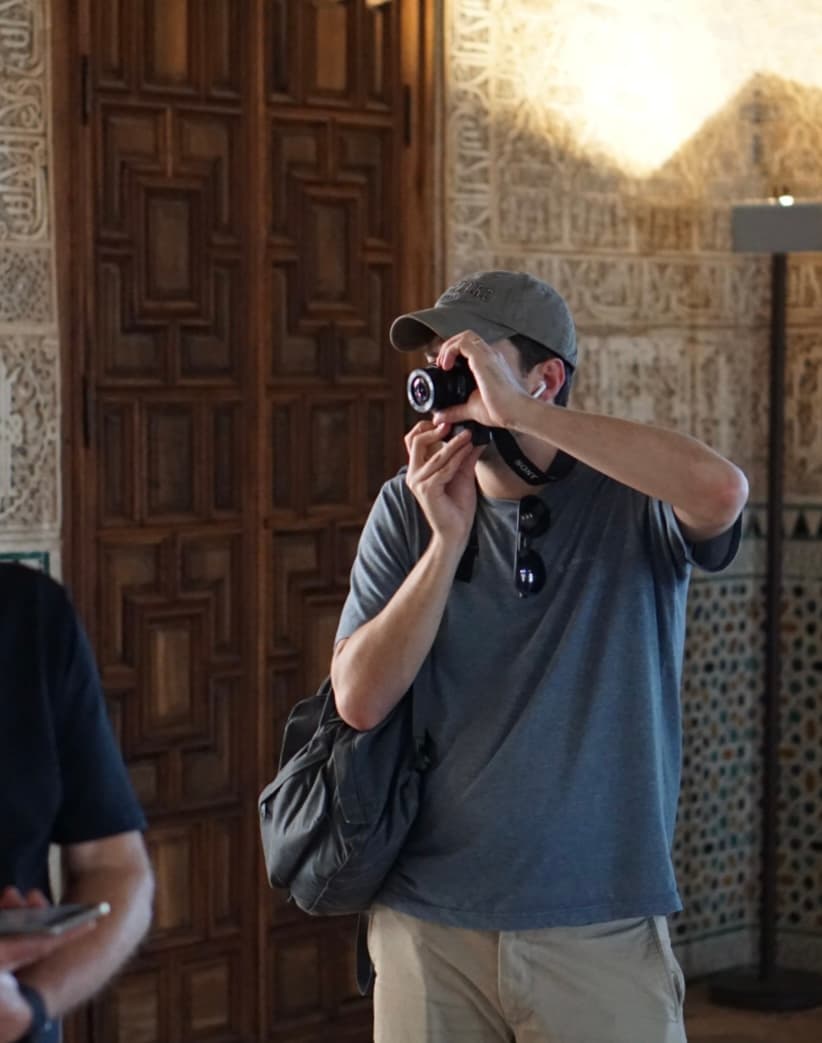
Sony is the camera system I know best because it is the system I have used while learning travel, street, family, macro, landscape, and wildlife photography. My first interchangeable-lens camera was a Sony A6000. Its small size made it easy to take to Spain, Italy, the beach, and family outings without feeling like I was carrying a large professional camera. As my interests shifted toward wildlife and detailed macro work, I moved into a high-resolution full-frame Sony body because I wanted more room to crop and a broader path into full-frame lenses. Sony is not the only good camera system, but it is the one I can discuss from real experience.
Why not a different brand?
Canon, Nikon, Fujifilm, Panasonic, OM System, and other manufacturers make excellent cameras. This guide does not attempt to declare Sony universally better. I simply do not have the same firsthand history with those systems, and I would rather give a narrower recommendation based on equipment and workflows I understand than repeat generic comparisons. If you already own lenses from another brand, enjoy that brand's controls or color, or have access to a school or family lens collection, staying with that system may be the smarter choice.
APS-C vs full frame: which is right for a beginner?
APS-C is often the more relaxing beginning: smaller bodies, smaller lenses, lower prices, and useful apparent reach for wildlife. Full frame becomes attractive when low light, large prints, heavy cropping, access to full-frame lenses, or a deliberate professional path justifies the total cost. Starting full frame can prevent rebuilding a lens collection later, but only when the buyer can afford a complete, usable kit. A full-frame body with no suitable lens is not a better system than an APS-C camera that goes everywhere.
The camera is only the beginning of the system
A body-only price can make a camera look affordable while hiding the real cost. Think about the first useful lens, memory cards, batteries, a comfortable way to carry the camera, storage, editing software, and any specialty equipment your subjects require. Wildlife adds telephoto reach and weather protection. Video adds microphones, lighting, power, support, and editing hardware. Paid work adds backups, reliability, insurance, and client delivery. The quiz uses a system budget rather than asking only what you can spend on the body.
Used Sony gear: a positive recommendation
Used APS-C is not a consolation prize. A clean used A6000 or A6400 from a reputable dealer can be an excellent first Sony, and a used A7 III or A7R III gives access to full-frame Sony at a fraction of the cost of a new A7 V. The quiz scoring adds points to used families when you are comfortable with used equipment and adjusts away from them when you want new gear with a full warranty.
A note about photography as a business
Many people buy a serious camera imagining that photography will immediately become a business. It can become paid work, but trying to commercialize every hobby is also a fast way to make it feel like another obligation. There is nothing wrong with taking photographs because it is fun. If you already know you want clients, choose your system intentionally, plan for lenses and backups, and build toward the work you want to sell. If you are a hobbyist, prioritize the camera that makes you want to go outside and make photographs.
Frequently asked questions
Is the Sony A6000 still worth buying in 2026?
Yes, if your budget is tight and you can find a clean used body. The A6000 lacks modern autofocus, in-body stabilization, and current video tools, but it produces good images and teaches the fundamentals. It is where I started. If you can stretch to a used A6100 or A6400, the improved subject tracking is usually worth the extra cost.
Should I start with APS-C or full frame?
APS-C is often the more relaxing beginning: smaller bodies, smaller lenses, lower cost, and useful apparent reach for wildlife. Full frame makes sense when low-light work, large prints, heavy cropping, access to existing full-frame lenses, or a deliberate professional path justifies the higher total system cost. Starting full frame can prevent rebuilding a lens collection later, but only when the buyer can afford a complete, usable kit.
How much should I budget for my first Sony camera system?
Think in terms of system budget -- body plus one useful first lens, memory cards, and a spare battery -- rather than body price alone. A genuinely usable APS-C kit starts around $800 to $1,200. A used full-frame kit with one practical lens typically starts around $1,500 to $2,500. Budget well beyond those numbers if video, telephoto reach, weather protection, or professional redundancy are part of the plan.
Can I use APS-C lenses on a Sony full-frame body?
Yes. Sony E-mount APS-C lenses fit and autofocus on full-frame Sony bodies, but the camera activates a crop mode that uses only the center portion of the full-frame sensor. This significantly reduces the effective resolution. APS-C lenses on a full-frame body are a transition option, not a compromise-free full-frame kit.
Is the Sony A6700 worth it over a used A6400?
For current wildlife autofocus, modern video, and a long-term APS-C system, yes. The A6700 is substantially newer and more capable than a used A6400. If you are on a tighter budget, primarily photograph still subjects, and are comfortable buying used, a well-priced A6400 can serve you well for years. The quiz distinguishes between these paths based on your autofocus and budget answers.
Do I need to buy Sony-brand lenses?
No. Tamron and Sigma make high-quality Sony E-mount lenses at competitive prices. Tamron has been a particularly strong value for wildlife telephoto zooms. Sony G and G Master lenses are excellent but come at a premium. Start with a lens appropriate for your most common subject rather than the brand name.
Does a bigger camera make someone look more professional?
This is a subjective topic. I have personally felt more confident arriving to paid work with a larger full-frame body, and occasionally sensed that clients associated larger gear with professional capability. That perception is not proof of skill or image quality. A compact Sony can produce professional work. If client-facing confidence is part of your reason for upgrading, that is a legitimate factor -- just do not let it override practical system decisions.
Should I buy new or used?
Used equipment from a reputable dealer can offer excellent value. Check condition grades, return policies, battery health, shutter count, card slot condition, screen, and lens mount. New equipment includes a full warranty and the latest manufacturing tolerances, but costs significantly more. The quiz scoring accounts for used comfort and adjusts recommendations accordingly.
Related guides
- What is in my camera bag
- Wildlife photography collection
- Lensrentals review: why I rent wildlife gear before buying
- Capturing backyard birds with the Sony 200-600mm
- Birding at Bettman Nature Preserve
- Photography field notes
Note. Recommendations on this page are based on my own Sony ownership and research. I have personally owned and used Sony APS-C and full-frame cameras. Camera prices and model availability change frequently -- always verify current pricing before purchasing. Last reviewed July 14, 2026.